


The term El Niño (Spanish for "the Child") refers to a warming of the ocean surface, or above-average sea surface temperatures, in the central and eastern tropical Pacific Ocean. The low-level surface winds, which normally blow from east to west along the equator (“easterly winds”), instead weaken or, in some cases, blow in the opposite direction (from west to east, or “westerly winds”).
EL NIÑO: Storm Preparedness
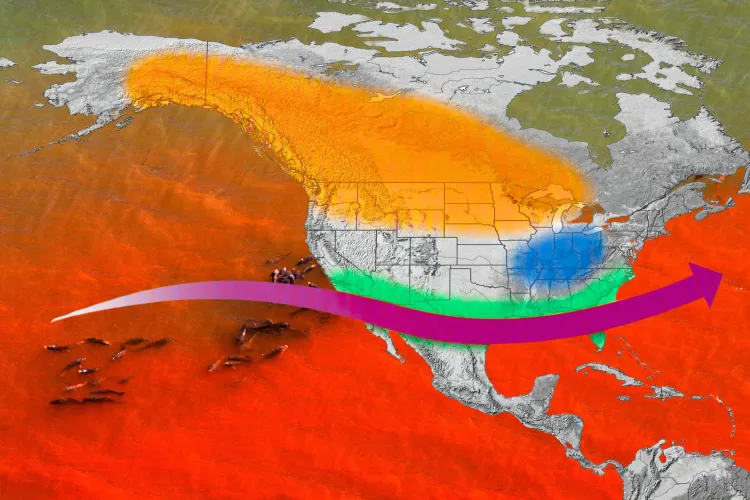
Image Source: El Niño Climate Center
What Can Be Expected During An El Niño?
|
|
|
The City of Lemon Grove is preparing for the potential impacts of an El Niño event that the National Weather Service expects to intensify during fall and winter 2026–27.
These conditions could affect communities throughout the city. Understanding the potential risks and taking steps to prepare in advance can help residents protect their homes, property, and families.
The City's stormwater drainage system in the public right-of-way is designed to handle typical rainfall events. However, heavy rainfall — particularly when a large amount of rain falls in a short period — can overwhelm the system and increase the risk of localized flooding.
Free Sandbags for Residents
Lemon Grove residents can receive up to 10 free sandbags per household at the Lemon Grove Fire Department, located at 7853 Central Ave.
Proof of residency is required. Sandbags are self-service, so residents must fill the bags themselves.
You Got Your Sandbags. Now What?

Video Credit: The San Diego County News Center
Preparing Your Family for El Niño
- ✓ Have a portable emergency go kit. Make sure valuables, documents and medications are readily available and in waterproof containers.
- ✓ Have an evacuation plan.
- ✓ Monitor weather conditions through alerts and weather forecasts.
- ✓ Make sure your car is in good condition. Check windshield wipers and tires.
- ✓ Have flashlights handy.
- ✓ Secure trash and debris.
- ✓ If traveling, be aware of traffic signal outages, downed power lines and road conditions.
Preparing Your Home & Property
Floods can happen anywhere. Most homeowners insurance does not cover flood damage. Flood insurance is a separate policy that can cover buildings, the contents in a building, or both, so it is important to protect your most important assets.
Inspect all sloped areas for signs of erosion, gullies, surface cracks, and slumping. Inspect buildings, patios, retaining walls, and garden walls for signs of cracking or rotation, which may indicate slope movement has occurred. If signs of slope movement are observed, the property owner may consider contacting a California-licensed geologist or geotechnical engineer for a site inspection.
Inspect large bare areas that may be sources of mudflows during a storm event. Consider covering or vegetating bare areas before the storm season. Consider covering and securing mounds of loose soil or fill material.
Inspect and remove debris from retaining wall drains, surface drains, culverts, and gutters prior to the storm season. Stormwater runoff should be directed into appropriate drainage control areas to avoid excessive soil saturation.
Inspect all structures, revetments, and bulkheads for signs of distress, loss of material, obstructed drainage, or exposed reinforcing steel before the storm season and after every storm. If significant problems are observed, the property owner may consider contacting a California-licensed engineer for maintenance suggestions.
Inspect trees and bushes. Clear anything that could be a hazard from around the home.
Inspect roofs to check for loose tiles, holes, or other signs of distress.
When to Call 911
- Life-threatening situations: Rapidly rising floodwaters trapping people or entering a home.
- Downed power lines: Any fallen or low-hanging electrical wire, which you must always assume is energized.
- Severe accidents: Car crashes, severe injuries, or people trapped in vehicles or moving mud/debris.
- Gas leaks: If you smell gas or suspect a line is broken.
When NOT to Call 911
For non-emergency storm issues such as blocked storm drains, minor street flooding, fallen tree branches blocking a non-critical road, potholes, or power outages without immediate hazards, contact your local city services or the Public Works Wepartment instead.


